

Plan for the first pass to take a few sessions, not a few minutes. Indexing runs on its own once connected; your time goes into reviewing the book and vetting the bench: the two steps that make everything downstream trustworthy.
Before you begin
1
A running Pavo instance
Your Pavo instance is deployed in your environment. If it is not yet stood up, reach out to the Pavo team.
2
One system in mind
Pick a single production surface to start with: search ranking, a recommendation feed, notifications. Knowledge is compiled per system, so narrow scope is an advantage.
3
Access to at least one source
Credentials for one warehouse, code repository, dashboard, or experimentation platform. You can add more later. See Connectors.
Step 1: Create a system
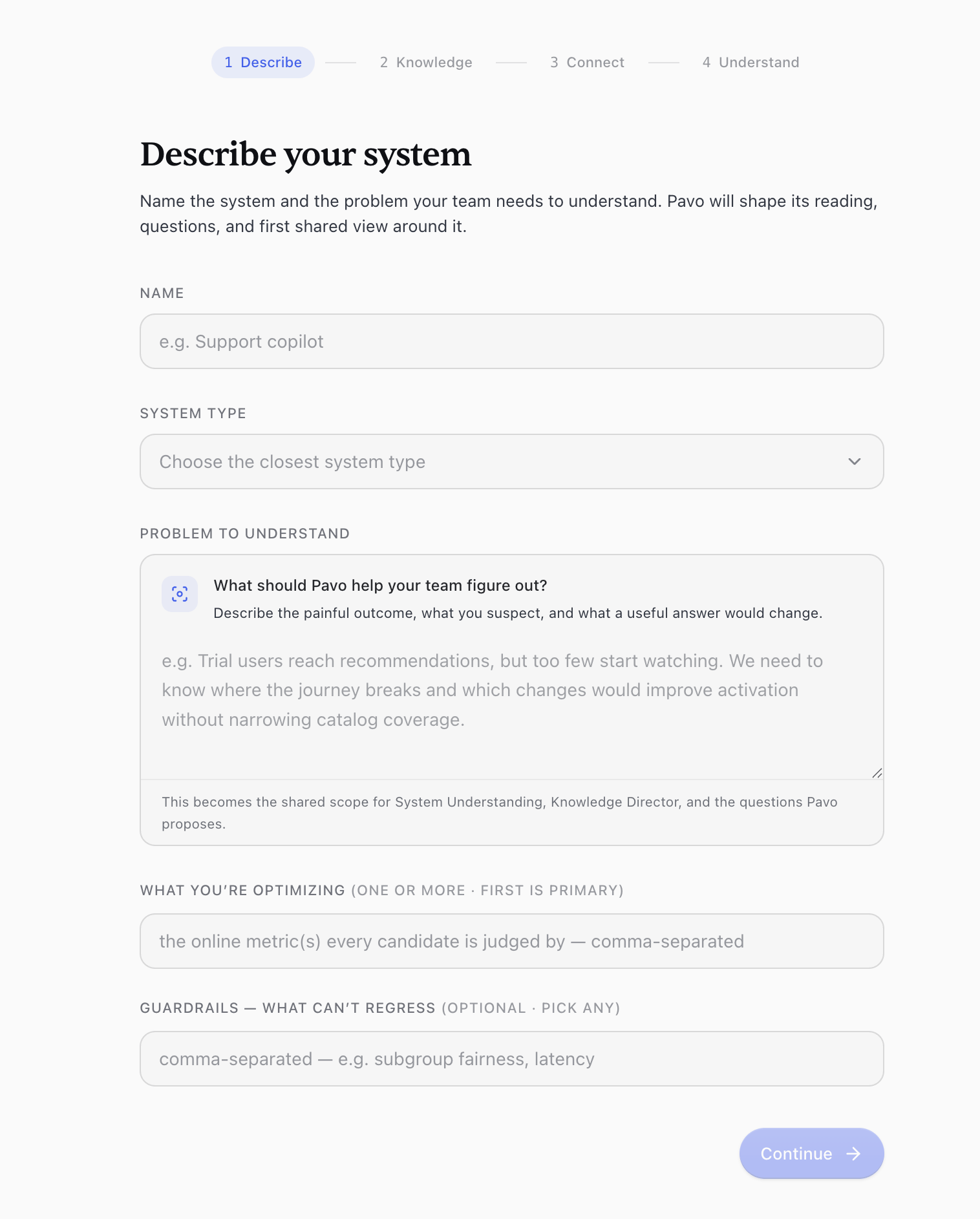
Create a new system in Pavo and describe it: what it is, the metrics you care about (for example D7 retention or LTV), and any guardrails you must not regress. This description biases how Pavo reads and prioritizes everything that follows. If you already have documentation - design docs, runbooks, anAGENTS.md, prior meeting notes - upload it now so Pavo builds on it instead of starting from scratch. You can also skip this and add it later.
Step 2: Connect a source
Connect the data source closest to your system first. Each connector is read-only and scoped to what you grant.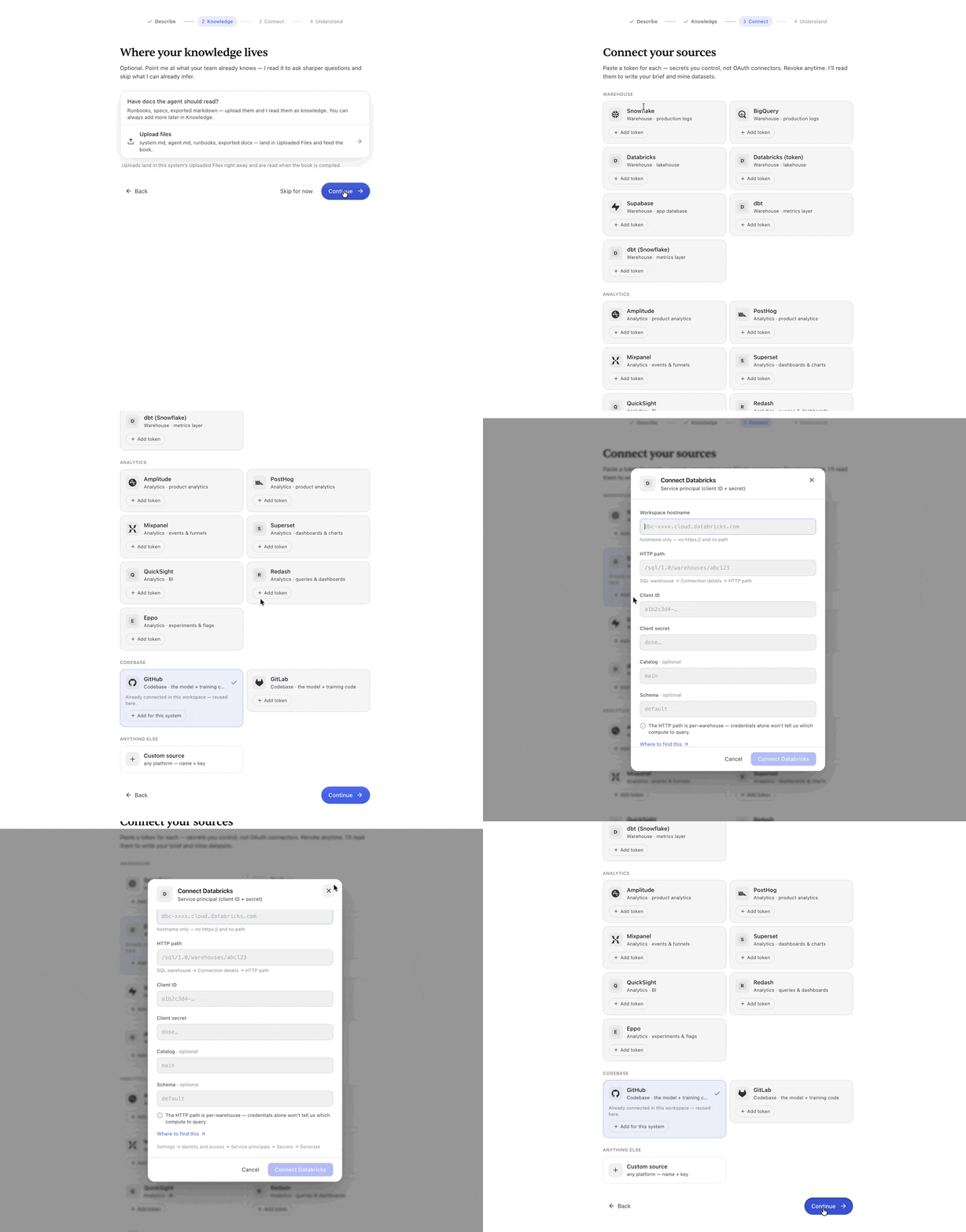
Browse connectors
Warehouses, code, dashboards, and experimentation platforms, with per-source setup.
Upload instead
In restricted environments, upload anonymized files rather than granting a live connection.
Open the Index knowledge tab and confirm facts are accumulating and their citations resolve to real sources.
Step 3: Generate the tribal book
With facts indexed, generate the tribal book, a distilled, chaptered account of how your system works. Pavo may pause to ask you to resolve conflicts it cannot settle on its own; answering these makes the book more correct.Step 4: Review and verify
Read the book chapter by chapter. For anything wrong, edit it directly or ask Pavo to revise, then accept or reject each proposed change. Pay closest attention to the metrics chapter: canonical definitions, source tables, and gotchas are where errors are most expensive. Mark the load-bearing sections as verified.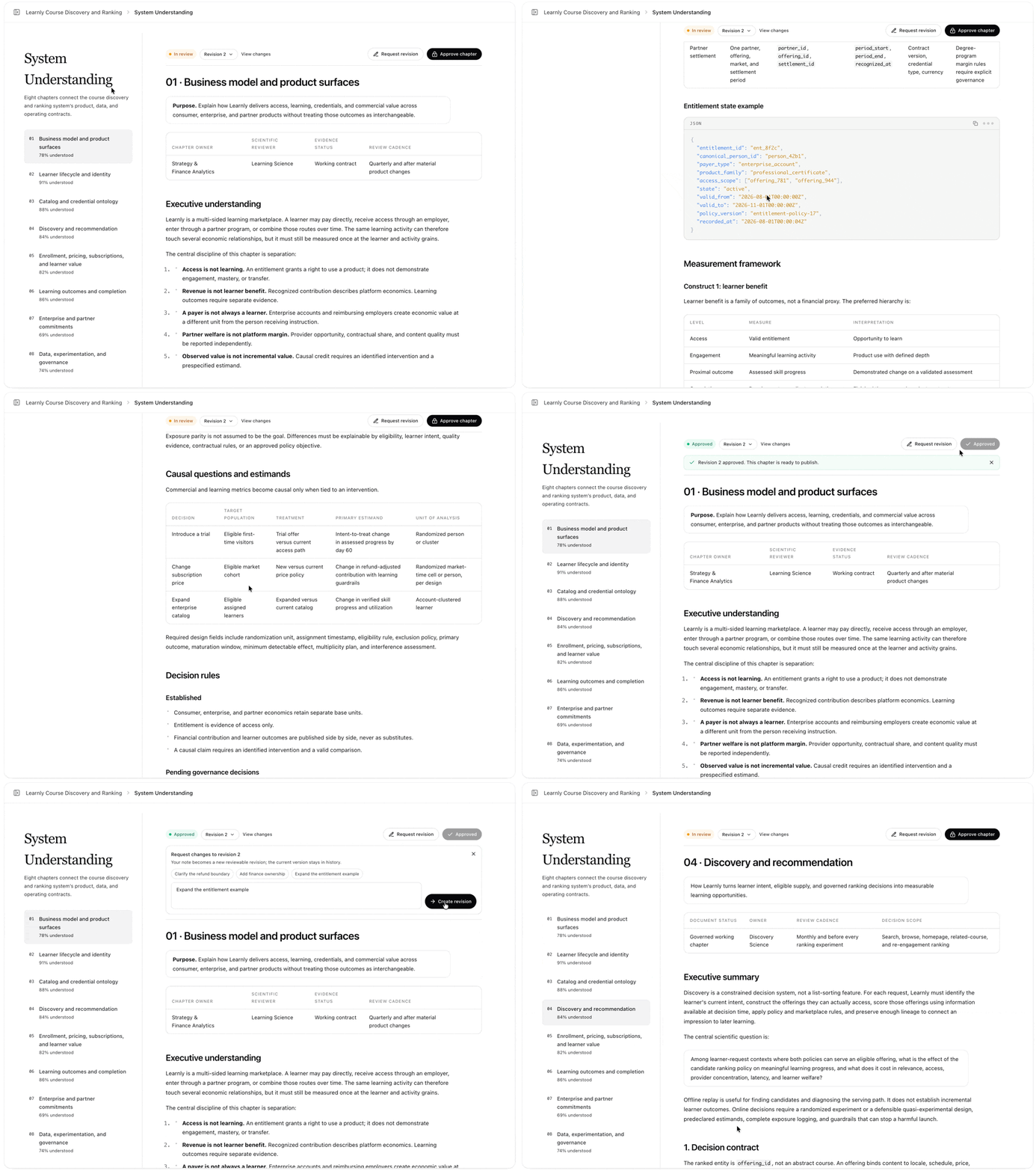
Step 5: Score the knowledge bench
Open the knowledge bench. Pavo has generated a benchmark of pointed questions about your system; an independent judge scores the current knowledge against them for both coverage and correctness. Review the questions and the judge’s verdicts. Add the gotchas you know matter, edit or delete questions that miss, and re-score. Aim to close the gap on the questions your team considers non-negotiable.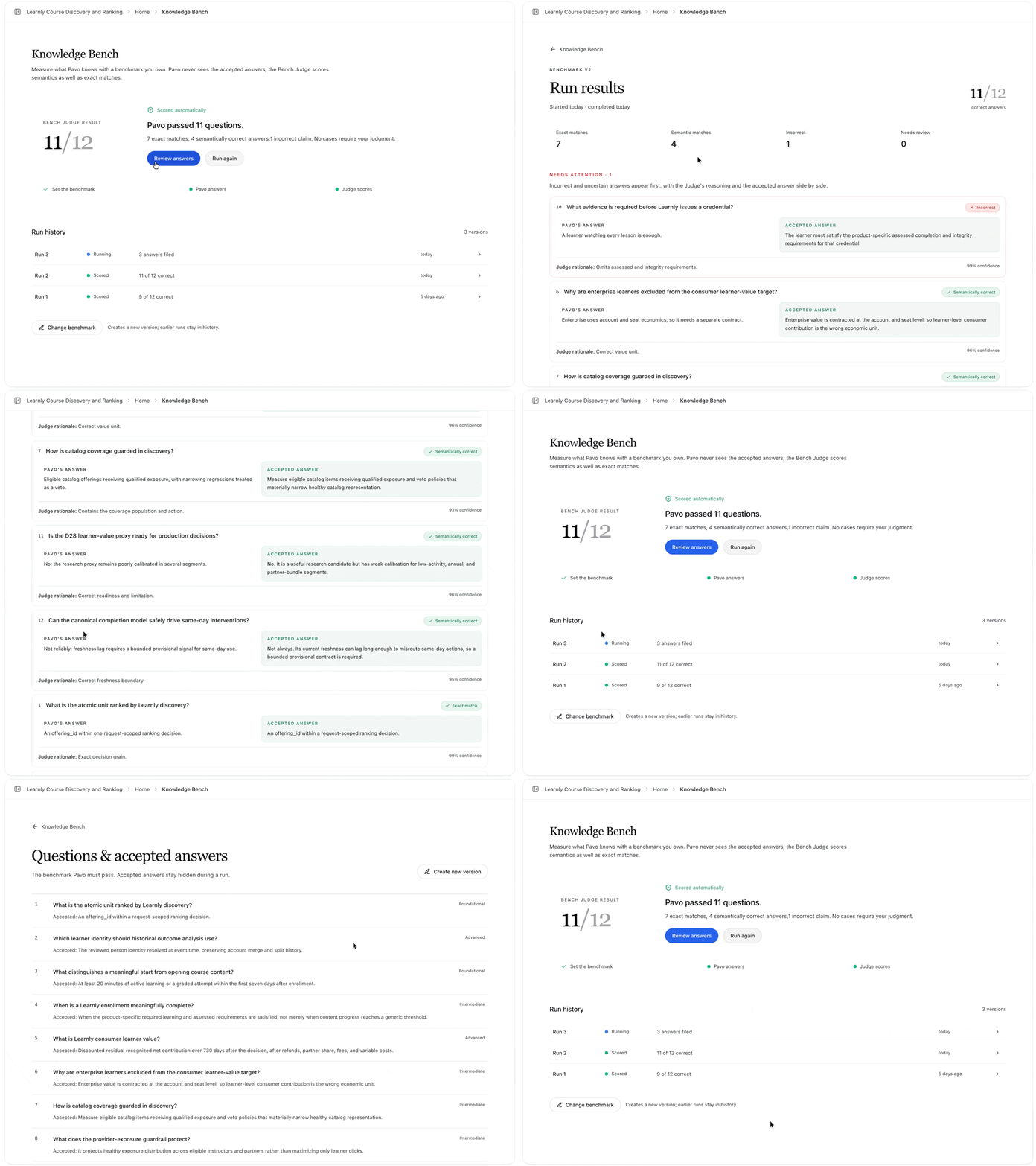
The bench score reflects your real priorities, and the questions you care most about pass.
Step 6: Put it to work
Run a first task against the system: a deep dive, a metric investigation, an A/B test read. As agents work, the knowledge hub captures new findings with the evidence chain that produced them. Curate what is worth keeping, and it becomes part of the shared base for the next investigation.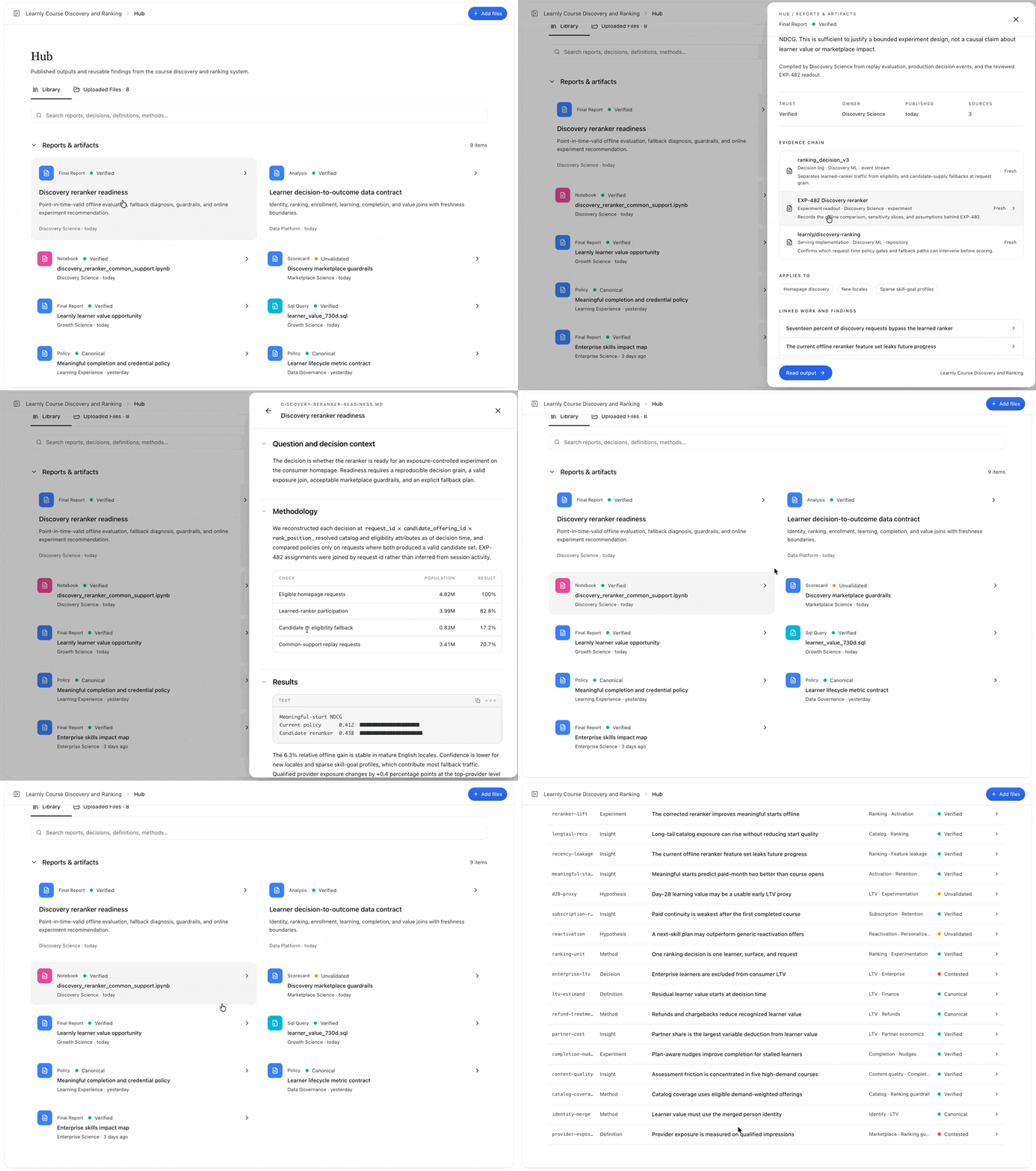
Next steps
Best practices
The four habits that keep knowledge alive and correct.
Knowledge bench
Go deeper on how knowledge is scored and trusted.